
Training sessions
Karate Classes
Try Karate Classes in Riyad Combat Club
Karate classes details
Training
60 minutes for kids, and 90 minutes for adults.
Calorie burning
600
It depends on the intensity of the training, the individual's fitness level, and their body weight.
Duration
60 minutes for kids, and 90 minutes for adults.
Training level
All levels are welcome, either beginners or experts.
Request for Free trial
about classes
Karate Classes
Karate classes at Riyadh Combat Club provide structured training suitable for multiple skill levels, aiming to build physical fitness and teach self-defense skills under the supervision of specialized coaches. Each session begins with preparation and warm-up exercises, followed by training in stances, movements, punches, kicks, and blocking techniques. Participants practice these techniques individually or with their training partners while following the coach’s instructions.
Karate is one of the sports that falls under martial arts. It shares similarities with Taekwondo, Muay Thai, and Kung Fu in developing physical fitness and self-defense abilities. However, karate has its own techniques, rules, and methods for organizing movements. The intensity of karate training sessions varies according to the group’s skill level and the session’s objectives. Some training sessions focus on mastering the fundamentals, while others emphasize reaction speed, combining movements, and executing sequences of techniques with precision and control.
What Is Karate?
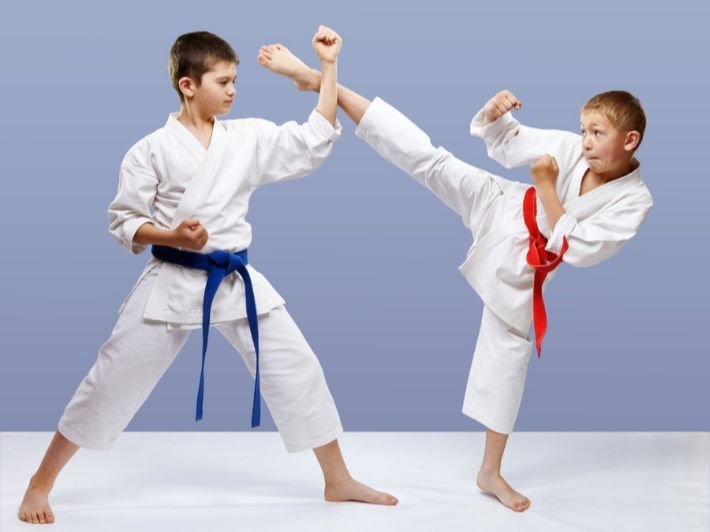
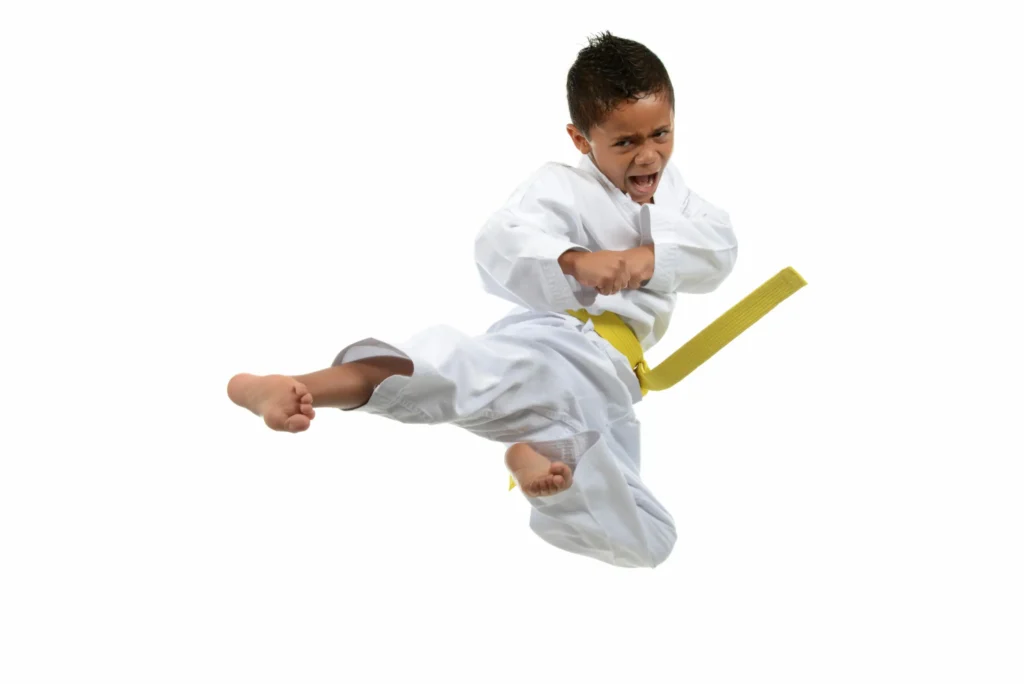
Karate is a Japanese martial art that originated on the island of Okinawa and later developed in Japan into a structured and widely practiced sport. The word “karate” means “empty hand,” reflecting its reliance on punches, kicks, blocks, and movements without weapons. It emphasizes precision, proper timing, and control over force and distance.
Karate training is based on three interconnected components:
Kihon: The fundamentals, which teach basic stances and techniques.
Kata: Structured sequences of movements that combine offensive and defensive techniques in a specific order.
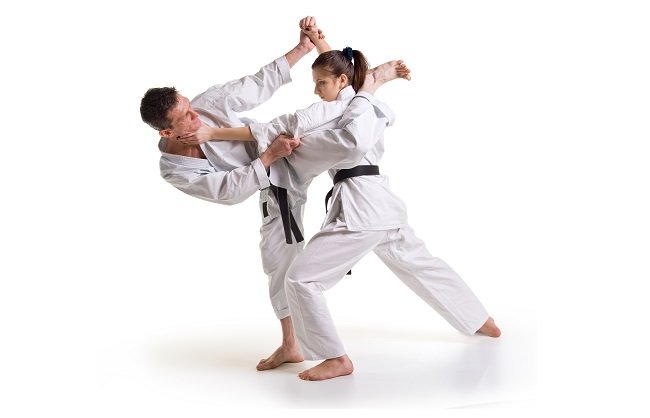
Kumite: Applying learned skills with a partner under rules designed to maintain participants’ safety.
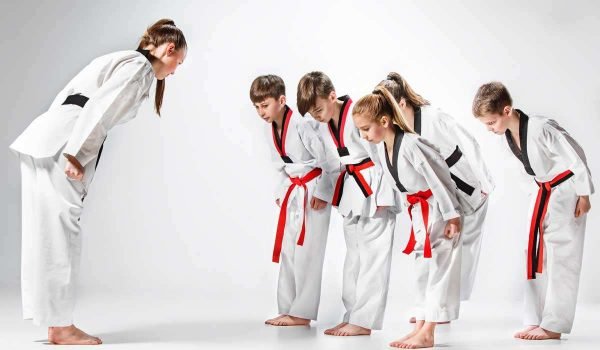
As practitioners learn karate, they progress from understanding body positions and movement patterns to coordinating techniques and responding to changing situations. Throughout training, they follow the coach’s instructions and observe the etiquette, greetings, and respect expected in the training hall.
Types of Karate
Karate has several styles, each based on a different school of practice:
Shotokan: The most widely practiced style, known for powerful techniques and low stances.
Goju-Ryu: Combines hard and soft techniques, emphasizing breathing and close-range combat.
Shito-Ryu: Known for its diverse kata movements and extensive collection of kata forms compared with other styles.
Wado-Ryu: Emphasizes speed, agility, and evasion techniques.
Kyokushin: Known for its demanding, full-contact fighting style, which emphasizes physical endurance and the use of both hands and legs. It is often associated with knockdown karate.
Learning karate at Riyadh Combat Club provides an opportunity to understand the fundamentals of the sport and gradually improve performance.
Benefits of Karate
The benefits of karate include improving various aspects of physical fitness.
Improved physical fitness: Karate training involves coordinated movements that help develop strength, endurance, flexibility, and agility. Practicing karate also improves balance, reaction speed, and cardiovascular fitness, particularly when participants regularly perform movement drills and successive training rounds.
Enhanced mental skills and self-confidence: Learning karate helps improve concentration and timely decision-making while developing discipline, patience, and control over reactions. As practitioners progress and learn self-defense skills, they can develop greater confidence in their abilities, learn to respect others, and respond calmly to different situations.
What Equipment and Clothing Are Needed to Start Training?
Beginners attending karate classes need comfortable clothing and equipment that allow them to perform stances, kicks, and movements freely.
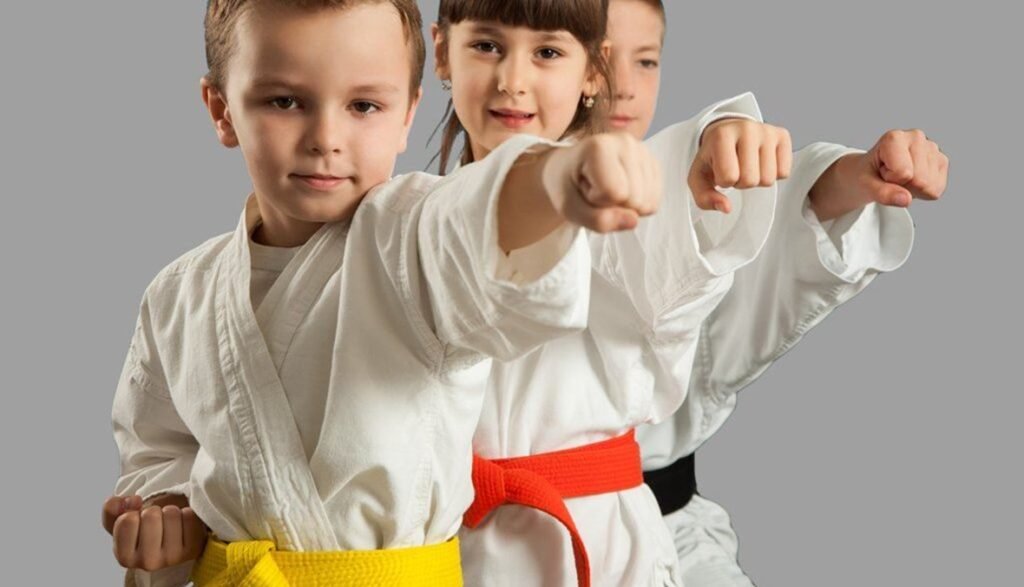
Karate uniform (Karategi): This is the standard uniform for karate and consists of a white jacket and trousers, along with a belt whose color represents the practitioner’s training level. The uniform should fit properly without restricting the limbs or being so loose that it interferes with movement.
Protective equipment: When progressing to kumite and sparring exercises, participants use protective gear selected by the coach according to their age and the type of training. This may include a mouthguard, karate gloves, shin and foot guards, and a body protector. Each piece of equipment must be fitted correctly to provide the required protection without affecting breathing or movement speed.
Personal essentials: Participants are also advised to bring a water bottle, a small towel, and a bag to organize their belongings.
Our Customers Reviews
Frequently Asked Questions
How Long Does It Take to Learn Karate?
Beginners can learn the basic principles of karate within the first few months. However, reaching an advanced level requires consistent practice over several years, as progress depends on the quality of technique and regular training, not simply the passage of time.
Do Karate Practitioners Have to Participate in Competitions?
Beginners can learn the basic principles of karate within the first few months. However, reaching an advanced level requires consistent practice over several years, as progress depends on the quality of technique and regular training, not simply the passage of time.
What Is the Best Age to Start Karate?
Ages 4–6: Children can begin learning the basic principles of karate through age-appropriate activities that support the development of their motor skills and concentration.
Age 6 and above: This is a suitable stage for learning more structured techniques and developing strength and technical skills.
Adults: There is no specific age limit for practicing karate to improve health, physical fitness, and self-defense abilities.
What Are the Karate Belt Colors?
Karate belts represent different skill levels. The progression commonly includes white, yellow, orange, green, blue, brown, and finally black. The order and grading system vary between karate styles and schools. Belt colors indicate a practitioner's progress and level of training.
What Are the Names of Karate Moves?
Karate techniques include punches, kicks, blocks, and stances. Some of the most well-known techniques include:
Punches: Oi-Zuki (lunge punch) and Gyaku-Zuki (reverse punch).
Kicks: Mae-Geri (front kick), Mawashi-Geri (roundhouse kick), and Yoko-Geri (side kick).
Blocks: Age-Uke (rising block), Gedan-Barai (downward block), Soto-Uke (outside block), and Chudan-Uchi-Uke (middle-level inside block).
Stances: Zenkutsu-Dachi (front stance), Kiba-Dachi (horse stance), and Mizubi-Dachi (a basic attention stance).
What Is the Strongest Karate Style?
Kyokushin is widely regarded as one of the most physically demanding karate styles because of its full-contact fighting approach, emphasis on endurance, and rigorous training methods.
What Equipment Is Used for Karate Training?
The basic equipment used for karate training includes:
Karate uniform (Karategi)
Karate belt
Protective gloves
Mouthguard
Shin guards
Foot guards
The exact equipment required depends on the practitioner's age, training level, and whether the session involves sparring.
What Are the Rules of Karate?
The basic rules and requirements of karate include:
Following the rules governing techniques, movement, and the competition area.
Wearing the required protective equipment.
Showing respect through proper greetings and etiquette.
Developing and maintaining basic physical skills.

