
Training sessions
Taekwondo Classes
Try Taekwondo Classes at Riyadh Combat Club
Details of Taekwondo Classes
Training
A combat sport that uses a variety of punching techniques to increase general fitness and enhance strength, speed, and hand-eye coordination.
Calories burning
500-750 Depending on training intensity, fitness levels, and the participant’s weight.
Duration
60 minutes for kids and 90 minutes for adults.
Training level
All levels are welcome, whether beginners or experts.
Request for Free trial
About the classes
Learn Taekwondo for Different Age Groups and Skill Levels
Riyadh Combat Club offers professional Taekwondo classes for different age groups and skill levels, including children, women, and men, with sessions suitable for both beginners and advanced practitioners. These classes focus on improving physical fitness, flexibility, discipline, and self-defense skills under the supervision of professional coaches and champions.
The club also offers MMA classes for adult men and women, as Taekwondo is one of several martial arts incorporated into combat training. Its fast-kicking techniques complement other disciplines, including Jiu-Jitsu, Boxing, and Muay Thai. Taekwondo also provides opportunities to participate in regional and international competitions.
What Is Taekwondo?
Taekwondo is a self-defense sport and Korean martial art that emphasizes speed, concentration, and powerful kicks, alongside punches used for self-defense and techniques that help develop mental discipline.
The sport originated in Korea more than 2,000 years ago as a means of self-defense against potential threats. Today, Taekwondo is practiced worldwide in more than 200 countries. It became an official Olympic sport at the Sydney 2000 Olympic Games.
The word Taekwondo consists of three Korean elements:
Tae: Refers to the foot or leg.
Kwon: Refers to the fist or fighting.
Do: Refers to the way, philosophy, or discipline.
Taekwondo Basics
At Riyadh Combat Club, Taekwondo fundamentals focus on stances, defensive techniques, and basic kicks that form the foundation of this Korean martial art.
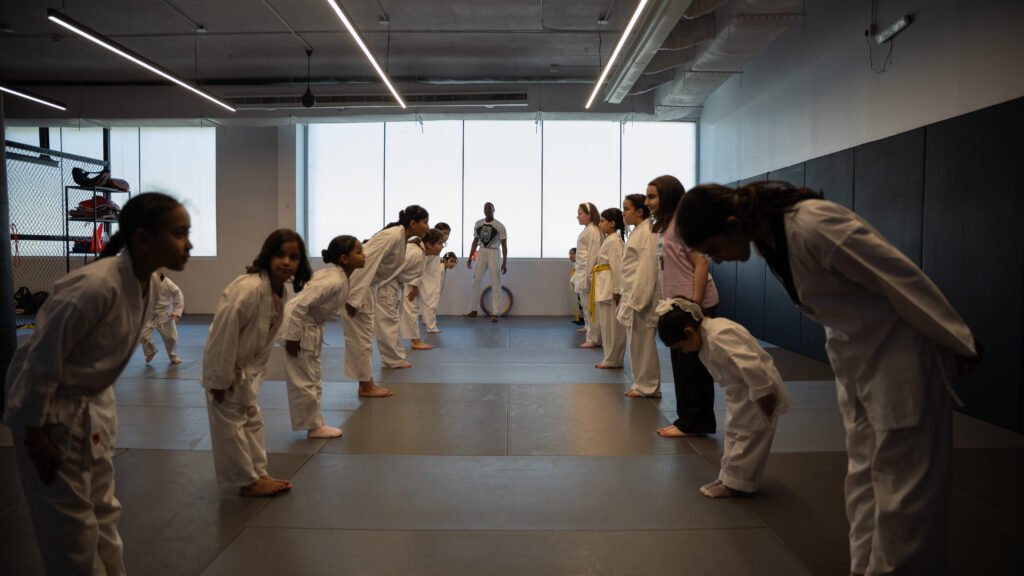
Basic Stances: Include the ready stance and bow, the walking stance (Ap Seogi), the front stance (Ap Kubi), and other stances that help maintain balance and stability during movement.
Blocking Techniques: Include low blocks to defend against attacks directed at the lower body, middle blocks to protect the torso, and high blocks to protect the head and face.
Basic Kicks: Include the front kick, downward kick, and roundhouse kick. These fundamental techniques help develop power, speed, and accuracy.
Poomsae: These are predefined movement sequences that simulate a confrontation with an imaginary opponent. They combine stances, punches, blocks, and kicks in a specific order to develop balance, accuracy, concentration, and technical proficiency. Poomsae is also used in belt grading examinations.
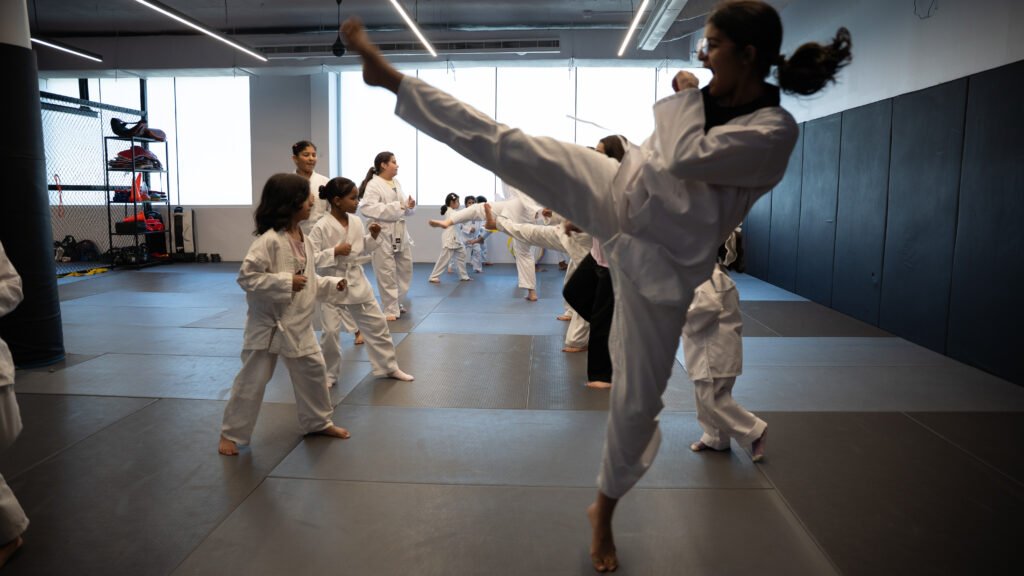
Benefits of Taekwondo
Taekwondo offers physical and mental benefits, making it an excellent choice for people of different ages.
Improved Flexibility and Agility: The sport relies heavily on high and circular kicks, which help stretch the muscles and ligaments.
Better Balance and Coordination: Practitioners learn to coordinate their hands, feet, and torso simultaneously while moving at high speed.
Increased Self-Confidence: Learning self-defense techniques and progressing through belt grading examinations can give practitioners a strong sense of achievement.
Self-Discipline and Self-Control: Taekwondo’s Korean philosophy emphasizes respect for the rules, the instructor, and the opponent.
Faster Reaction Times: Practitioners develop quicker reactions to defend themselves and recognize opportunities to attack.
Improved Concentration and Mental Alertness: Sparring requires practitioners to read and anticipate an opponent’s movements in fractions of a second, helping develop sharp mental focus.
What Does the Taekwondo Training Program at Riyadh Combat Club Include?
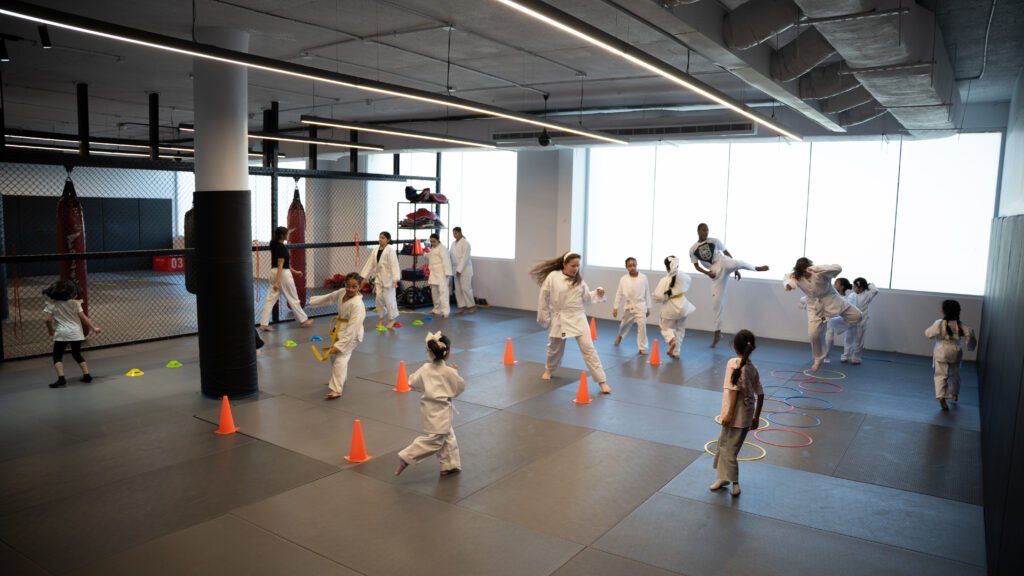
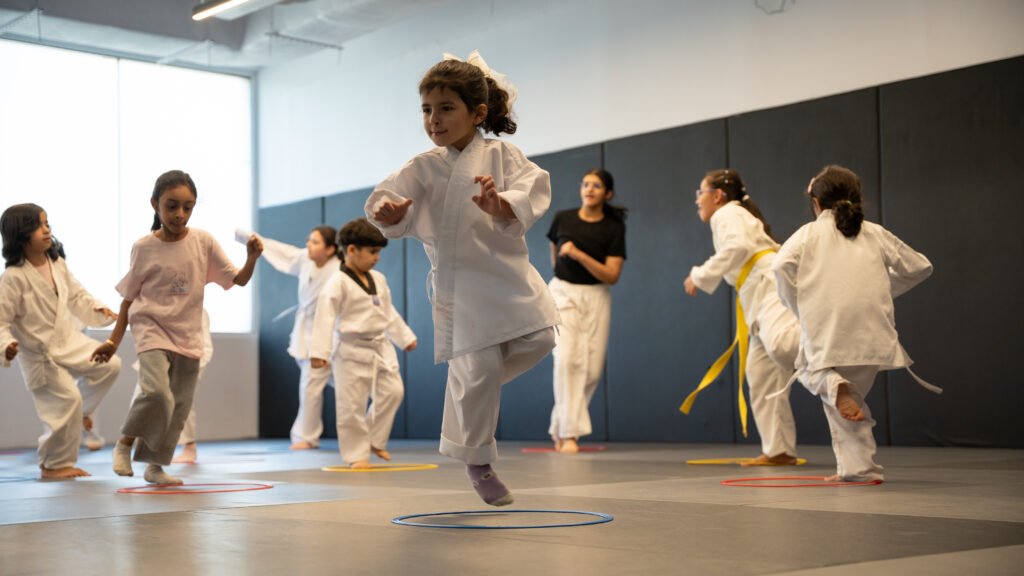
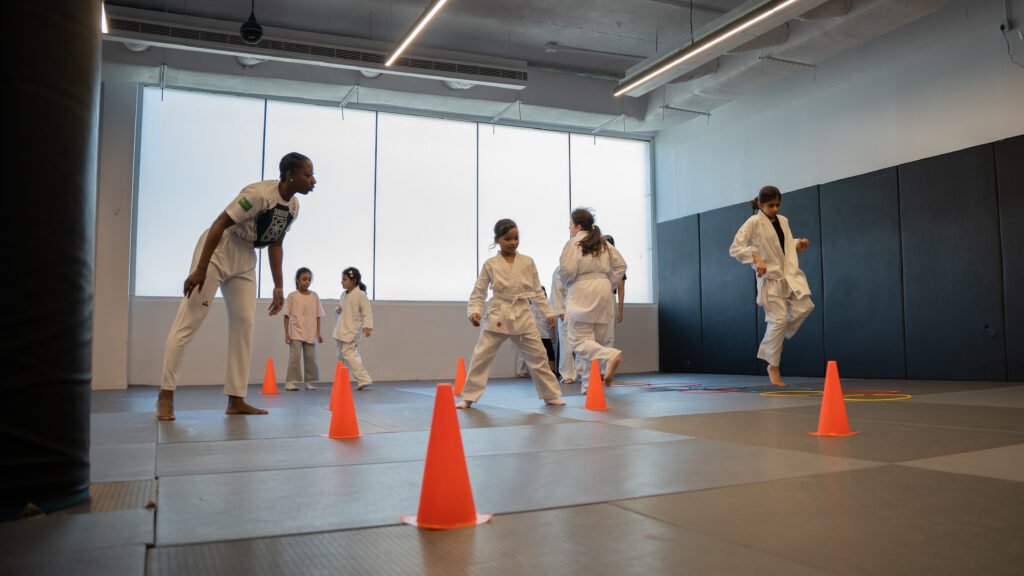
At Riyadh Combat Club, our Taekwondo training sessions help practitioners develop their combat skills and physical fitness through warm-ups, conditioning exercises, and flexibility training.
Each session begins with light cardio exercises, followed by a strong emphasis on stretching, as Taekwondo kicks require a high degree of flexibility.
Practitioners then train in fundamental kicking techniques, including the straight front kick, roundhouse kick, back kick, and spinning kicks. Special attention is given to kicking technique and execution.
The training then progresses to Poomsae and shadow sparring, where practitioners perform consecutive offensive and defensive movements against an imaginary opponent.
Finally, practitioners apply their techniques in practical sparring sessions with a training partner while wearing full protective equipment, including a headguard and chest protector, to become familiar with competitive conditions.
Our Customers Reviews
Frequently Asked Questions
What Is the Best Age to Start Taekwondo?
Children can generally begin Taekwondo at around 4 to 6 years old. Training at this age focuses on improving flexibility, balance, and fundamental motor skills.
What Are the Taekwondo Belt Colors?
White Belt: The beginning stage of learning basic techniques.
Yellow Belt: Developing basic stances, punches, blocks, and kicks.
Green Belt: Progressing to more advanced techniques and Poomsae.
Blue Belt: Improving technical skills, power, and accuracy.
Red Belt: An advanced stage that prepares practitioners for the black belt.
Black Belt: Demonstrating proficiency in Taekwondo fundamentals and progressing to Dan ranks.
What Are the Names of Taekwondo Moves?
Taekwondo's fundamental techniques are divided into several categories.
Kicking Techniques (Chagi):
Ap Chagi: Front kick.
Yop Chagi: Side kick.
Dwi Chagi: Back kick.
Miro Chagi: Pushing kick.
Kawi Chagi: Scissor kick.
Naeryo Chagi: Axe kick.
Punching and Defensive Techniques:
Seugi: Stances and body positioning.
Makki: Blocking techniques used to defend against attacks.
Jireugi: Straight or targeted punching techniques.
What Equipment Is Needed for Taekwondo?
Taekwondo equipment includes the dobok, the traditional white uniform worn with a belt, a chest protector, a headguard, shin and forearm guards, hand protection, a mouthguard, and groin protection.
What Are the Rules of Taekwondo?
Taekwondo rules cover the scoring system, permitted strikes, methods of winning, and penalties for rule violations.

